Sony A7 IV Review: The Best All-Round Full-Frame Camera?
Our in-depth review of the Sony A7 IV. We test image quality, autofocus, video capabilities and real-world performance.
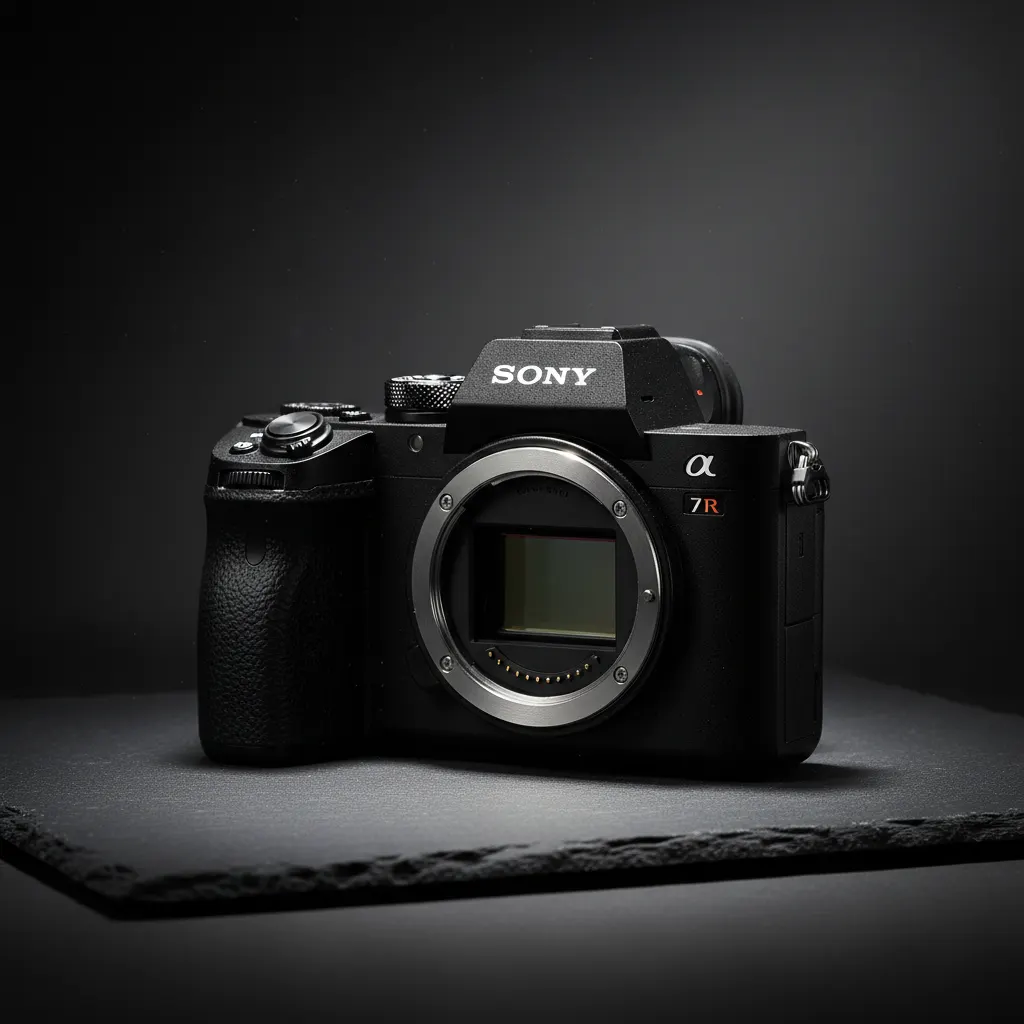
The Sony A7 IV has earned a reputation as the “do everything” full-frame mirrorless camera. Positioned between the budget-friendly A7C II and the high-resolution A7R V, it aims to be the ideal choice for photographers who need a capable all-rounder without breaking the bank.
After months of shooting with the A7 IV across landscapes, portraits, events, and street photography, here’s our honest assessment.
Build and Design
The A7 IV feels substantially more refined than its predecessor. Sony redesigned the grip — deeper and more comfortable during extended shoots. The body is weather-sealed with a magnesium alloy construction that inspires confidence in challenging conditions.
Notable physical improvements:
- Larger, deeper grip that accommodates bigger lenses comfortably
- Redesigned menu system — finally, Sony menus make sense
- Fully articulating screen (a first for the A7 line)
- Dual card slots — one CFexpress Type A, one SD UHS-II
- Improved EVF at 3.69 million dots
The body weighs 659g — not the lightest, but reasonable for a full-frame camera with this feature set.
Image Quality
The 33MP Exmor R CMOS sensor strikes an excellent balance between resolution and file size. You get enough detail for large prints and heavy cropping without the massive files of 50MP+ sensors.
ISO performance is outstanding. Images remain clean and usable up to ISO 6400, with acceptable noise at ISO 12800 for editorial work. By ISO 25600, noise reduction becomes necessary, but the results are still workable in a pinch.
Dynamic range is among the best in class. We consistently recovered 4-5 stops of shadow detail in RAW files without visible banding. Highlights are equally forgiving — overexposed skies can often be pulled back convincingly.
Color science has improved noticeably from the A7 III. Skin tones are warmer and more natural. The auto white balance handles mixed lighting better, and the Creative Look profiles give you more starting points for in-camera processing.
Autofocus
This is where the A7 IV truly shines. Sony’s Real-time Tracking AF and Real-time Eye AF are phenomenal:
- 759 phase-detect AF points covering 94% of the frame
- Eye AF works for humans, animals, and birds
- Subject recognition identifies vehicles, insects, and trains
- Low-light AF down to -4 EV
In practice, the A7 IV rarely misses a shot. We tested it at a wedding (fast-moving subjects, mixed lighting), a bird sanctuary (erratic flight paths), and street scenes (quick acquisition needed). Hit rates exceeded 90% in all scenarios.
The AF system is fast enough that you can genuinely rely on it for professional event work. Curious how it stacks up against the competition? See our detailed Nikon Z6 III vs Sony A7 IV comparison.
Video Performance
The A7 IV is a serious video tool:
- 4K 60fps with a 1.5x crop (Super 35)
- 4K 30fps full-frame with no crop
- 10-bit 4:2:2 internal recording
- S-Log3 and S-Cinetone picture profiles
- Active stabilization mode (with slight crop)
For hybrid shooters who need both photo and video excellence, the A7 IV is hard to beat at this price point — it also features in our best cameras for video content creation roundup. S-Cinetone in particular produces beautiful, cinematic footage with minimal grading.
Limitations: 4K 60fps requires a crop, and recording is limited to about 30 minutes in some conditions due to overheating.
Battery Life
The NP-FZ100 battery delivers approximately 580 shots per charge (LCD) or 520 shots (EVF) per CIPA standards. In real-world use, we typically got 700-800 shots before needing to swap batteries.
For a full day of shooting, carry two batteries. For professional events, three is recommended.
Lens Recommendations
The Sony E-mount ecosystem is the largest for full-frame mirrorless:
- Kit lens: Sony FE 28-70mm f/3.5-5.6 (adequate but not inspiring)
- Upgrade zoom: Tamron 28-75mm f/2.8 Di III VXD G2 (best value)
- Portrait prime: Sony FE 85mm f/1.8 (sharp, affordable, beautiful bokeh) — see more options in our best camera lenses for portraits guide
- Wide angle: Sony FE 20mm f/1.8 G (excellent for landscapes and astro)
- All-purpose: Sony FE 24-105mm f/4 G OSS (the one-lens solution)
Who Should Buy the Sony A7 IV?
Buy it if:
- You need a camera that excels at both photo and video
- You shoot events, weddings, portraits, or editorial work
- You want access to the largest full-frame lens ecosystem
- You value reliable autofocus above all else
Skip it if:
- You need ultra-high resolution (look at the A7R V)
- You’re primarily a sports/wildlife shooter (the A9 III is faster)
- Budget is tight (the A7C II offers similar quality in a smaller body)
- You’re happy with APS-C (the A6700 covers most needs at lower cost)
Verdict
The Sony A7 IV deserves its reputation as the best all-round full-frame mirrorless camera. It doesn’t top any single category — the A7R V has more resolution, the A9 III is faster, and dedicated video cameras offer more recording options.
But no other camera does everything this well at this price. If you can only own one camera and need it to handle anything you throw at it, the A7 IV is the one to get.
Score: 9/10
You might also like
Canon EOS R6 Mark III Review: A Worthy Upgrade?
Canon's latest all-rounder gets a new sensor, improved AF, and better video specs. We test whether the R6 III justifies the upgrade from the R6 II.
Best Action Cameras in 2026: GoPro, DJI, and Insta360 Compared
Capture adventure in stunning quality. We review and compare the best action cameras for sports, travel, diving, and everyday vlogging.
Fujifilm X100VI Review: The Hype is Real
The Fujifilm X100VI is the most sought-after compact camera in years. We review its 40MP sensor, film simulations, and street photography performance.