Best Camera Lenses for Portrait Photography
The right lens transforms your portraits. We review the best portrait lenses for Sony, Canon, Nikon, and Fujifilm systems at every budget.
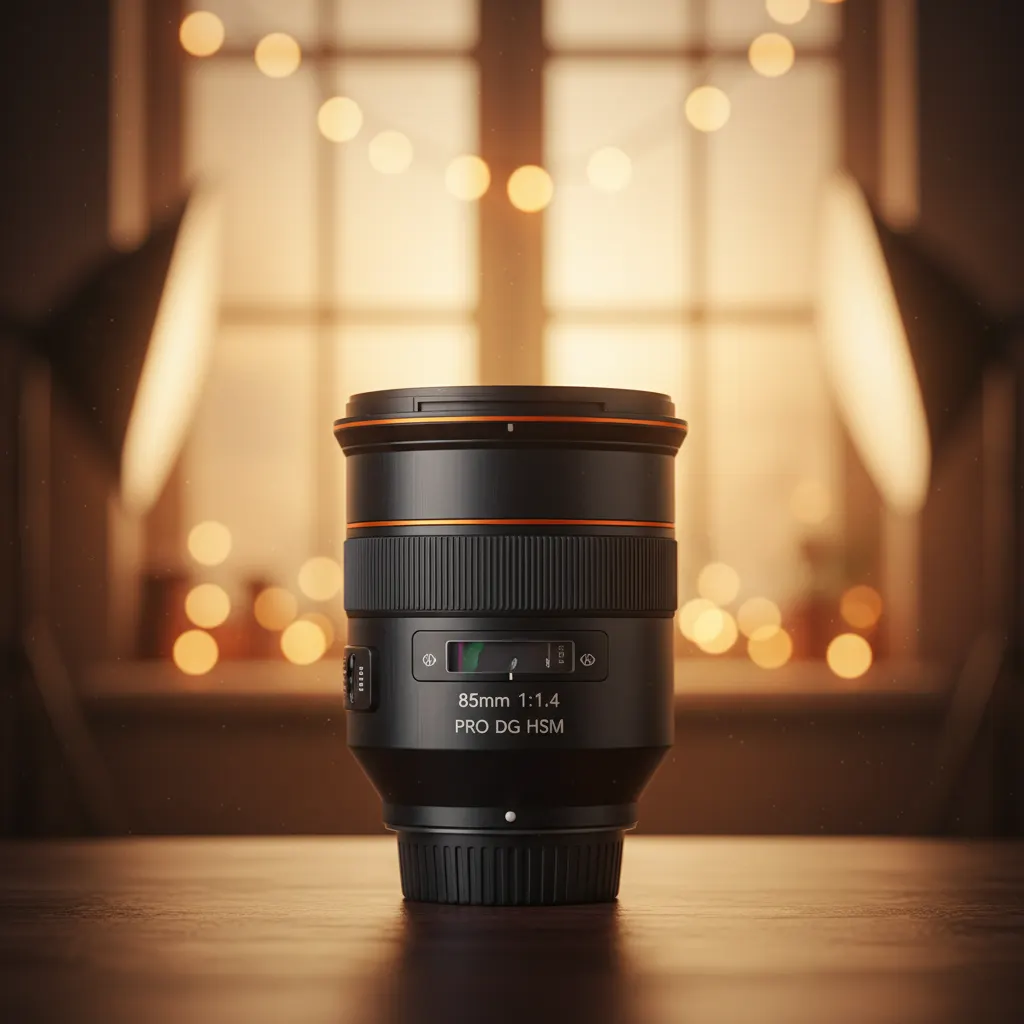
A portrait lens does one thing exceptionally well: it makes people look great. The combination of a flattering focal length, wide aperture for creamy bokeh, and sharp rendering of facial detail creates images that connect the viewer with the subject.
Here are the best portrait lenses available for each major camera system.
What Makes a Great Portrait Lens?
Focal Length
The classic portrait range is 85-135mm (on full-frame). This provides:
- Flattering facial proportions (no wide-angle distortion)
- Comfortable working distance from your subject
- Natural compression that separates subject from background
50mm works well for environmental portraits where you want context. 135mm is ideal for tighter headshots with maximum background separation.
Maximum Aperture
Wide apertures (f/1.2, f/1.4, f/1.8) create shallow depth of field — the signature creamy background blur that makes portraits pop. Wider apertures also let in more light, useful for indoor and evening shoots.
Bokeh Quality
Not all blur is created equal. The best portrait lenses produce smooth, creamy bokeh without distracting patterns. This depends on the optical design and the number of aperture blades (more blades = rounder bokeh balls). For a deeper dive into achieving that dreamy background, read our guide on how to create beautiful bokeh.
Best Portrait Lenses by System
Sony E-Mount
| Lens | Focal Length | Aperture | Price Range | Our Take |
|---|---|---|---|---|
| Sony FE 85mm f/1.8 | 85mm | f/1.8 | $$ | Best value — sharp, fast AF, beautiful bokeh |
| Sony FE 85mm f/1.4 GM II | 85mm | f/1.4 | $$$$ | Best 85mm money can buy |
| Sigma 85mm f/1.4 DG DN Art | 85mm | f/1.4 | $$$ | Exceptional quality at a lower price |
| Sony FE 135mm f/1.8 GM | 135mm | f/1.8 | $$$$ | Legendary — possibly the best portrait lens ever made |
| Sigma 50mm f/1.4 DG DN Art | 50mm | f/1.4 | $$ | Sharp, fast, versatile |
Our pick: The Sony FE 85mm f/1.8 offers 90% of the quality of the f/1.4 GM at a fraction of the price. Start here.
Canon RF
| Lens | Focal Length | Aperture | Price Range | Our Take |
|---|---|---|---|---|
| Canon RF 85mm f/2 Macro IS STM | 85mm | f/2 | $$ | Excellent value with IS and macro capability |
| Canon RF 85mm f/1.2L USM | 85mm | f/1.2 | $$$$$ | The ultimate portrait lens — dreamy bokeh |
| Canon RF 50mm f/1.8 STM | 50mm | f/1.8 | $ | Absurdly good for the price |
| Sigma 135mm f/1.8 DG HSM Art (adapted) | 135mm | f/1.8 | $$$ | Tack sharp with beautiful rendering |
Our pick: The Canon RF 85mm f/2 Macro IS STM punches well above its weight. IS stabilization is a bonus you don’t get on most portrait primes.
Nikon Z
| Lens | Focal Length | Aperture | Price Range | Our Take |
|---|---|---|---|---|
| Nikon Z 85mm f/1.8 S | 85mm | f/1.8 | $$ | Superb sharpness and AF accuracy |
| Nikon Z 85mm f/1.2 S | 85mm | f/1.2 | $$$$$ | Optically flawless — heavy and expensive |
| Nikon Z 50mm f/1.8 S | 50mm | f/1.8 | $$ | One of the best 50mm lenses at any price |
| Nikon Z 135mm f/1.8 S Plena | 135mm | f/1.8 | $$$$ | Designed specifically for perfect bokeh |
Our pick: The Nikon Z 85mm f/1.8 S is exceptional. Fast AF, tack sharp, and perfectly sized.
Fujifilm X-Mount (APS-C)
Remember the 1.5x crop factor — if you’re unsure what that means, our article on camera sensor sizes explained breaks it down. A 56mm lens on Fujifilm gives you the 85mm equivalent field of view.
| Lens | Focal Length | Aperture | Price Range | Our Take |
|---|---|---|---|---|
| Fujifilm XF 56mm f/1.2 R WR | 56mm | f/1.2 | $$$ | The portrait king of APS-C |
| Fujifilm XF 50mm f/2 R WR | 50mm | f/2 | $$ | Compact, sharp, weather-sealed |
| Fujifilm XF 90mm f/2 R LM WR | 90mm | f/2 | $$$ | 135mm equivalent — beautiful compression |
| Viltrox 56mm f/1.4 | 56mm | f/1.4 | $ | Incredible value third-party option |
Our pick: The Fujifilm XF 56mm f/1.2 R WR combined with Fujifilm’s film simulations produces portraits with a character you won’t find in any other system.
Portrait Photography Tips
Focus on the Eyes
The eyes are always the focal point of a portrait. Lock focus on the nearest eye. Modern eye-AF makes this automatic, but verify your results.
Use Natural Light When Possible
Window light is beautiful, free, and flattering. Position your subject near a large window with indirect light for soft, even illumination. A white reflector on the shadow side fills in contrast. For outdoor portraits, golden hour light offers the most flattering natural illumination you can find.
Leave Room for Expression
The best portraits capture genuine emotion. Talk to your subject, make them laugh, give them something to do with their hands. Technical perfection means nothing without human connection.
Don’t Overlook the Background
A distracting background ruins even a perfectly lit portrait. Look for clean, simple backgrounds or use a wide aperture to blur distractions into smooth bokeh.
Our Verdict
Every system has excellent portrait options. If we had to pick one lens across all systems, the Sony FE 135mm f/1.8 GM produces the most stunning portraits we’ve ever seen. But it’s a specialist tool at a specialist price.
For most photographers, an 85mm f/1.8 (any system) is the perfect starting point. It’s affordable, versatile, and produces beautiful results from day one.
You might also like
Best Tripods for Photography: From Budget to Pro
A solid tripod transforms your photography. We review the best tripods for landscapes, travel, video, and studio work at every price point.

Best Camera Bags for Travel Photography in 2026
Protect your gear on the go. We review the best camera backpacks, slings, and shoulder bags for travel photographers.
Best SD Cards for Cameras: Speed, Reliability, and Value
Not all SD cards are equal. We test the fastest and most reliable SD and microSD cards for photography and video recording.