Mirrorless vs DSLR: Which Camera Should You Buy in 2026?
Mirrorless or DSLR? We compare size, autofocus, battery life, lens selection, and image quality to help you decide which type is right for you.
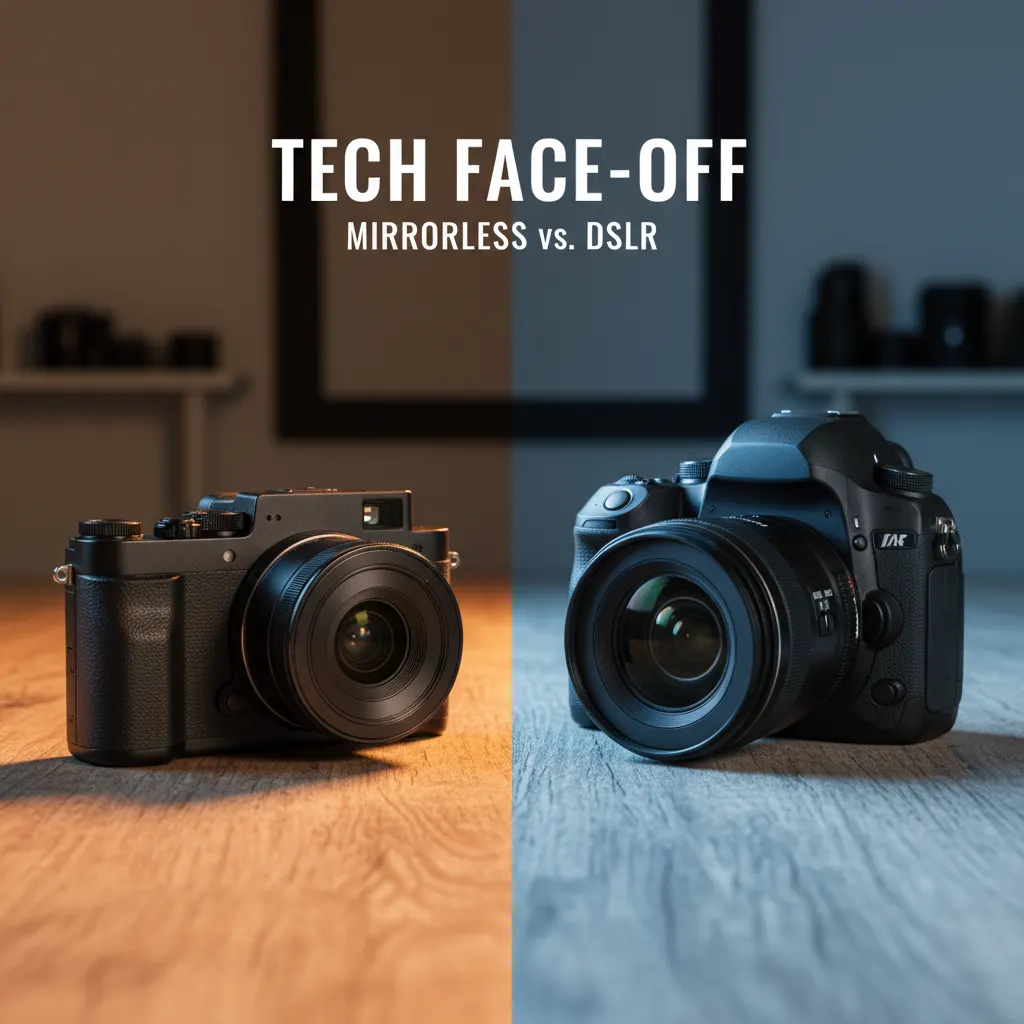
The mirrorless vs DSLR debate has been going on for years, but in 2026 the landscape has shifted dramatically. Major manufacturers have largely moved on from DSLR development, focusing their latest technology on mirrorless systems. Does that mean DSLRs are dead? Not exactly.
Here’s an honest comparison to help you decide.
How They Work: The Fundamental Difference
A DSLR (Digital Single-Lens Reflex) uses a mechanical mirror inside the body. Light enters through the lens, bounces off the mirror into an optical viewfinder, giving you a direct optical view of the scene. When you press the shutter, the mirror flips up and the sensor captures the image.
A mirrorless camera removes that mirror entirely. Light goes straight from the lens to the sensor, and the viewfinder shows a digital preview (EVF) of what the sensor is seeing.
This seemingly simple difference has massive implications for size, features, and performance.
Size and Weight
Winner: Mirrorless
Without the mirror box, mirrorless cameras are inherently more compact. A camera like the Sony A7 IV weighs 659g compared to a Nikon D780 at 840g. That difference adds up over a long day of shooting.
However, the gap narrows when you factor in lenses. A full-frame mirrorless camera with a large telephoto lens is still a heavy kit. Where mirrorless shines most is with compact prime lenses and shorter zooms.
Autofocus Performance
Winner: Mirrorless (by a wide margin)
This is where the generation gap is most obvious. Modern mirrorless cameras use on-sensor phase-detect AF that covers nearly the entire frame. Subject detection (faces, eyes, animals, vehicles) and real-time tracking are standard.
DSLRs use a separate AF module with a limited number of AF points clustered around the center. While fast for single-point focusing, they can’t match the coverage and intelligence of mirrorless AF systems.
If you shoot moving subjects — kids, pets, sports, wildlife — mirrorless autofocus is transformative.
Viewfinder Experience
Subjective — depends on preference
DSLR optical viewfinders show reality with zero lag. Many photographers prefer this natural, analog feel. There’s no battery drain from the viewfinder, and it works identically in any lighting condition.
Mirrorless EVFs show a digital preview that reflects your exposure, white balance, and creative effects in real time. This “what you see is what you get” preview is incredibly useful for beginners and professionals alike. Modern EVFs are bright and high-resolution, though some photographers still notice a slight digital quality.
Battery Life
Winner: DSLR
DSLRs comfortably deliver 1000+ shots per charge. Their optical viewfinders don’t drain battery. A Nikon D850 is rated at 1840 shots per charge.
Mirrorless cameras have improved significantly, but most still land between 400-700 shots per charge. The constant sensor readout and EVF drain power faster.
For travel or long events, plan on carrying extra batteries with mirrorless. It’s a minor inconvenience, not a dealbreaker.
Video Capabilities
Winner: Mirrorless
Mirrorless cameras were designed from the ground up for video. Features like 4K 60fps, 10-bit color, log profiles, unlimited recording, and in-body stabilization are common.
Most DSLRs offer decent 4K video, but with limitations: shorter recording times, rolling shutter artifacts, and less sophisticated video autofocus.
If video matters to you at all, mirrorless is the clear choice.
Lens Selection
Draw (with nuance)
DSLR mounts (Canon EF, Nikon F) have decades of lens options available, including excellent used glass. You can build a professional kit affordably by shopping the secondhand market.
Mirrorless mounts (Sony E, Canon RF, Nikon Z, Fujifilm X) are growing rapidly. Sony E-mount already has a massive catalog. Canon RF and Nikon Z are catching up with high-quality native options.
Many DSLR lenses can be adapted to mirrorless bodies with full functionality, giving you access to both ecosystems.
Image Quality
Draw
At the same sensor level, a DSLR and a mirrorless camera produce effectively identical image quality. The sensor technology is the same — our camera sensor sizes explained guide covers how sensor format affects your photos. A 24MP APS-C DSLR and a 24MP APS-C mirrorless camera will produce indistinguishable photos.
The differences come from processing, lens quality, and autofocus accuracy — not from the mirror mechanism.
Should You Buy a DSLR in 2026?
There are still valid reasons to choose a DSLR:
- Incredible used market — get pro-level bodies and lenses at a fraction of new mirrorless prices
- Battery life — genuinely better for extended shooting
- Optical viewfinder preference — some photographers simply prefer it
- Durability — flagship DSLRs like the D850 or 5D IV are built like tanks
But be aware: Nikon and Canon have officially ended DSLR development. No new models are coming, and lens development has moved to mirrorless mounts.
Our Recommendation
For new buyers: Go mirrorless. The technology is superior, the future development is there, and the prices have come down to DSLR levels. Check out our best mirrorless cameras for beginners to find the right model.
For existing DSLR owners: Don’t rush to switch. Your gear still takes excellent photos. Upgrade when a specific mirrorless feature (AF tracking, video, size) genuinely solves a problem for you.
For budget hunters: A used DSLR kit (like a Nikon D750 + 24-120mm f/4) offers astonishing value. Don’t let “older technology” discourage you from what’s still a superb photographic tool.
The best camera is the one that helps you capture the images you want. Mirror or no mirror, the person behind the viewfinder matters most.
You might also like
Nikon Z6 III vs Sony A7 IV: Full-Frame Showdown
Nikon Z6 III or Sony A7 IV? We compare autofocus, image quality, video features, and value to help you choose the right full-frame mirrorless camera.
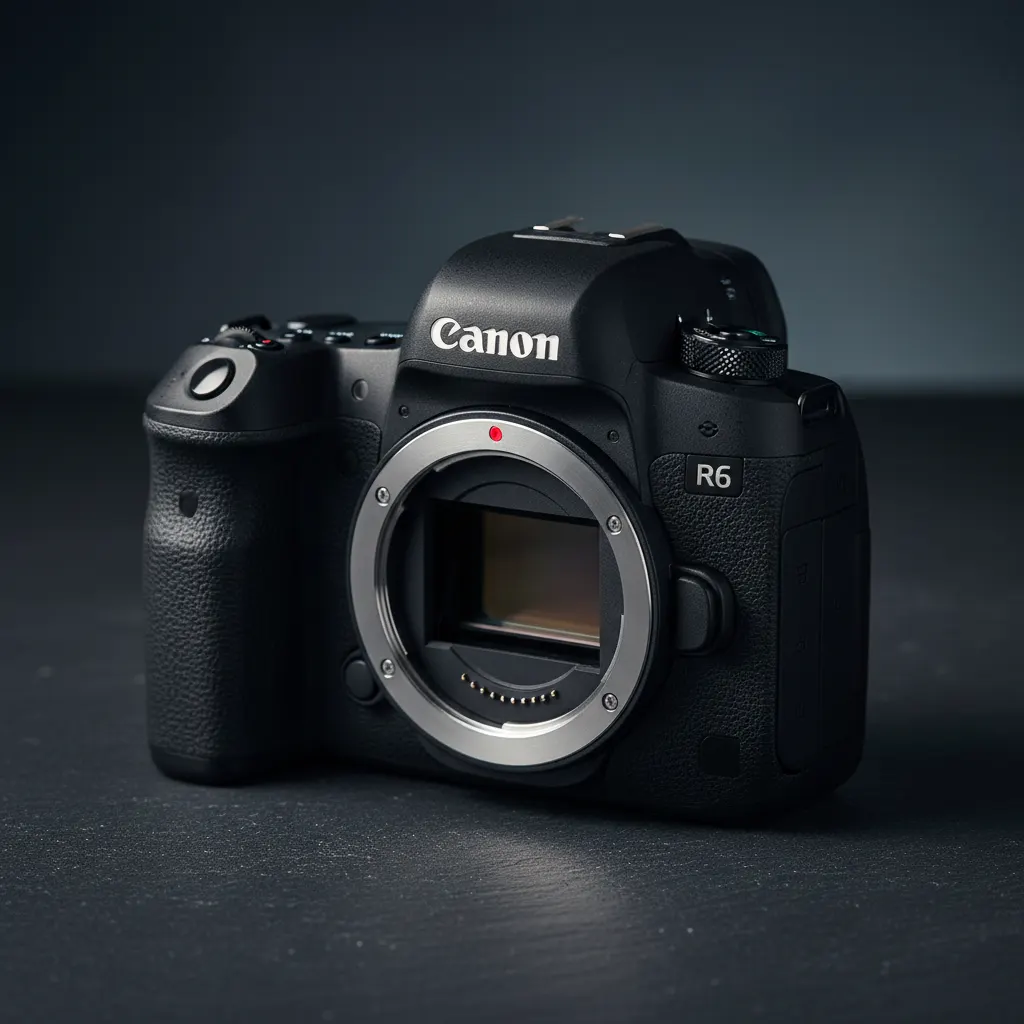
Canon EOS R6 Mark III Review: A Worthy Upgrade?
Canon's latest all-rounder gets a new sensor, improved AF, and better video specs. We test whether the R6 III justifies the upgrade from the R6 II.

Best Mirrorless Cameras for Beginners in 2026
Our top picks for beginner-friendly mirrorless cameras. Affordable, easy to use, and packed with features to help you learn photography fast.