Street Photography Tips: Camera Settings, Technique, and Etiquette
Master street photography with our guide to camera settings, composition techniques, and the unwritten rules of shooting in public spaces.
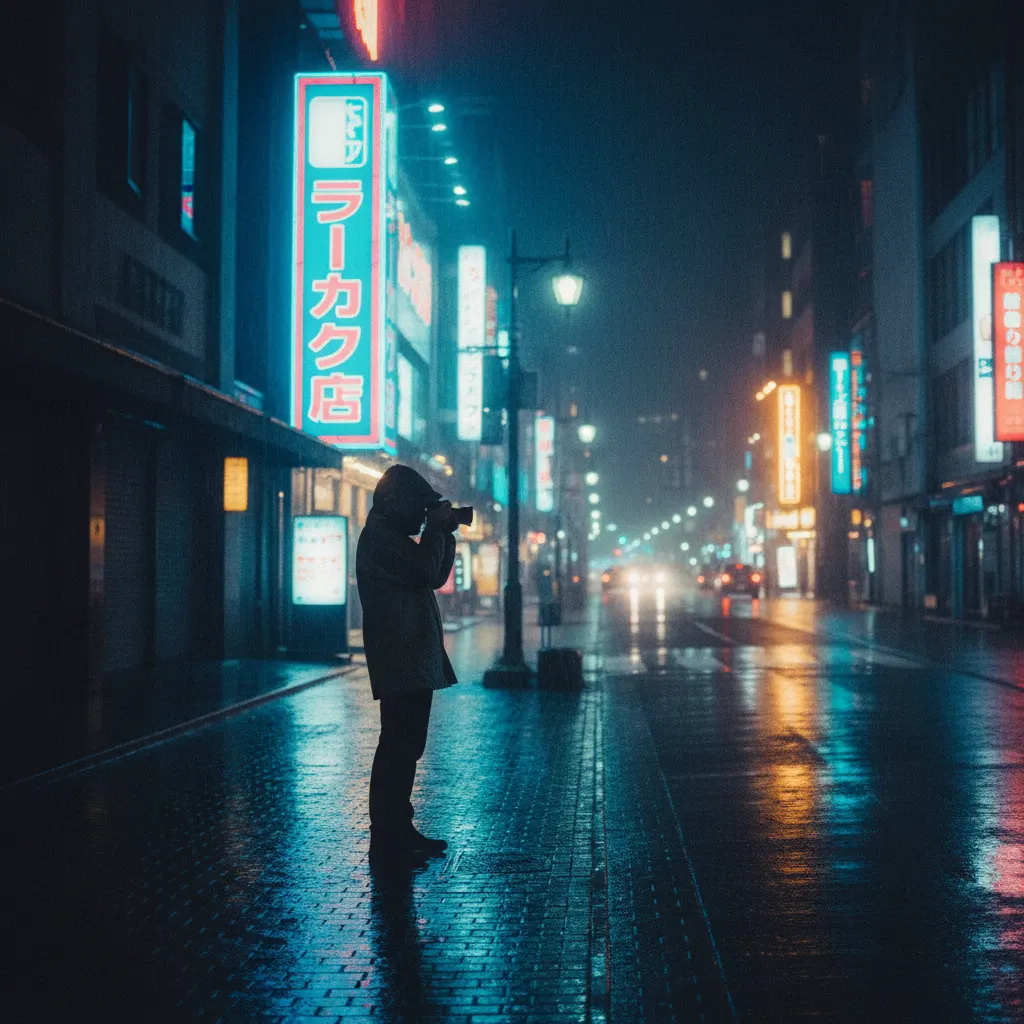
Street photography is the most democratic form of photography. You don’t need a studio, models, or expensive lighting. You just need a camera, a pair of comfortable shoes, and the willingness to notice the extraordinary in the ordinary.
Here’s how to get started — and how to get better.
The Best Camera Settings for Street Photography
Aperture Priority Mode
Set your camera to Aperture Priority (A or Av) and choose:
- f/5.6 to f/8 for general street scenes (enough depth of field to keep things sharp even if focus isn’t perfect)
- f/2.8 to f/4 when you want to isolate a subject from the background
- f/11 when shooting architecture or wider scenes where you want everything sharp
Shutter Speed
In Aperture Priority, the camera sets the shutter speed. But monitor it:
- Minimum 1/250s for freezing people in motion
- 1/500s or faster in bright light for crisp results
- Set your camera’s Auto ISO minimum shutter speed to 1/250
ISO
Use Auto ISO with a cap:
- ISO 100-6400 on a sunny day
- ISO 100-12800 on overcast days or in shade
- Let the camera handle the rest — modern sensors are excellent at high ISO. For more on handling dim conditions, see our guide on how to shoot in low light without flash
Focus Mode
- Continuous AF (AF-C) for moving subjects
- Zone AF or Wide area AF — don’t rely on single-point AF for fast-moving street scenes
- Pre-focus technique: Focus on a spot and wait for someone to walk into the frame
Best Cameras for Street Photography
The ideal street camera is small, quiet, and fast to operate:
- Fujifilm X100VI — the ultimate street camera with a fixed 35mm-equivalent lens
- Ricoh GR IIIx — pocketable with an APS-C sensor and 40mm-equivalent lens
- Leica Q3 — the premium option with a 28mm Summilux lens
- Sony A7C II — full-frame in a compact body with interchangeable lenses
- Any smartphone — the best camera is the one you have with you
Composition Techniques
Lead with Light
Great street photography is about light, not subjects. Look for:
- Hard shadows cast by buildings or objects
- Patches of light breaking through alleys
- Silhouettes against bright backgrounds
- Reflections in puddles, windows, and glass
Use Layers
The best street images have foreground, middle ground, and background elements that create depth. A person in the foreground, a cyclist in the middle, and a building in the background create a scene that the eye can explore.
Wait for the Moment
Henri Cartier-Bresson called it “the decisive moment.” Find an interesting background or light pattern, then wait for a person to walk into the perfect position. Patience beats burst shooting.
Embrace Geometry
Cities are full of lines, angles, and patterns — many of the composition rules every photographer should know apply directly to street scenes. Use them:
- Leading lines (streets, railings, shadows)
- Repeating patterns (windows, tiles, columns)
- Juxtaposition (old vs new, big vs small)
- Frames within frames (doorways, arches, windows)
Street Photography Etiquette
Know the Law
In most countries, photographing people in public spaces is legal. However:
- Some countries require consent for publication (France, for example)
- Private property owners can restrict photography
- Children require extra sensitivity (consider asking parents)
- Commercial use may require model releases
Be Respectful
- If someone asks you not to photograph them, respect their wish
- Don’t photograph people in vulnerable situations (homeless, distressed)
- Smile and be open — a confident, friendly photographer attracts less hostility
- If confronted, show the photo and offer to delete it
The Ethics of Candid Photography
The tension between capturing authentic moments and respecting privacy is real. Good street photographers navigate this with empathy. Ask yourself: would I want this photo taken of me?
Post-Processing for Street Photography
Less is more. Classic street photography processing:
- Convert to black and white (or use a monochrome film simulation)
- Increase contrast slightly
- Crop for stronger composition
- Dodge and burn to guide the viewer’s eye
- Keep it authentic — don’t composite or heavily manipulate
Tools: Lightroom Classic, Capture One, or Fujifilm’s in-camera film simulations (Acros, Classic Chrome).
Practice Exercises
- One block, one hour: Stay on a single street corner for an hour and photograph everything interesting that happens
- One lens, one day: Use a single focal length for an entire day — no zoom, no switching
- Shadows only: Spend a session photographing only shadows and light patterns
- Color theme: Choose one color and photograph only scenes dominated by it
- From the hip: Practice shooting without looking through the viewfinder
Our Verdict
Street photography is about seeing — really seeing — the world around you. The camera is just a tool. Start shooting with whatever you have, learn to read light, and develop the courage to capture the moments that move you.
If you want full creative control over your exposure in changing street light, learning how to use manual mode on your camera is a valuable next step.
The streets are always open. Go explore.
You might also like
Best Cameras for Video and Content Creation in 2026
YouTube, TikTok, or client work — we review the best cameras for video content creators at every level and budget.
Best Cameras Under $500 in 2026
You don't need to spend a fortune to take great photos. Here are the best cameras under $500 for every type of photographer.
Best Mirrorless Cameras for Beginners in 2026
Our top picks for beginner-friendly mirrorless cameras. Affordable, easy to use, and packed with features to help you learn photography fast.